
When the Seas Ate the World
Imagine standing on a coastline 12,000 years ago. The ice is melting, the air warmer, rivers swollen. Then, one day, the dam of an icebound lake the size of several Great Lakes bursts. A wall of water thunders across the land, sweeping forests, animals, and entire human camps into oblivion. For those who survived, the memory of a world suddenly drowned would never be forgotten.
Archaeology and geology tell us that at the end of the last Ice Age, this wasn’t rare, it was actually routine. Earth lurched through violent pulses of melting, and with them came floods so vast that our modern disasters look like puddle splashes in comparison.
The Floods of Ice Age’s End
-
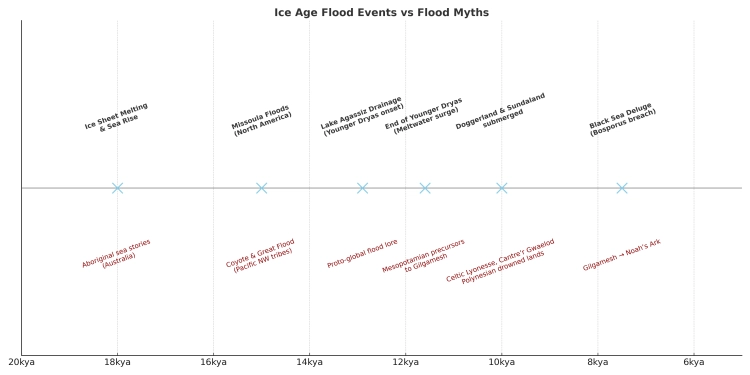
Missoula Floods (~15,000 years ago): An ice dam in Montana failed dozens of times, unleashing torrents that carved Washington’s Scablands. Indigenous tribes of the Pacific Northwest preserve stories of a deluge that scoured the land, oral memories of catastrophe written in legend.
-
Lake Agassiz (~12,900 years ago): A meltwater sea bigger than all the Great Lakes drained suddenly, plunging Earth into the Younger Dryas cold snap. For ancient peoples, this would have been remembered as the moment the world froze and drowned at once.
-
Doggerland & Sundaland (~10,000–8,000 years ago): Rising seas swallowed fertile plains now hidden under the North Sea and Southeast Asia. In their place came myths of drowned kingdoms; Lyonesse, Cantre’r Gwaelod, and Polynesian tales of lost islands.
-
Black Sea Deluge (~7,500 years ago): As the Mediterranean overtopped the Bosporus, the Black Sea coastline vanished in months. For farming villages suddenly displaced, it was nothing short of apocalyptic. Echoes of this event may lie behind the Epic of Gilgamesh and, later, Noah’s Ark.
Why the Myths Persist
Flood myths are nearly universal: Mesopotamia, India, Greece, Australia, the Americas. Scholars puzzle over this, why would cultures oceans apart tell such similar tales?
One answer is simple: because they lived them.
The end of the Ice Age wasn’t a gentle thaw; it was chaos. Walls of water, rising seas swallowing coasts, thunderous outbursts reshaping rivers. To witness that would be to carry its weight forever.
And humans remember. Not with spreadsheets and satellites, but with stories of wrathful gods, of seas punishing hubris, of chosen survivors who restart the world. They may be myths, but they were anchored in very real floods.
Global sea level rose 400 feet after the Ice Age. That's the height of a 40-story building!
The “What If” Question
Science can date the floods. Myth can tell us how they felt. Put them together and you get a provocative thought: maybe our ancestors weren’t just imagining the Great Flood. Maybe they were warning us, in the only language they had, of a time when the seas really did eat the world.
The Power of Memory
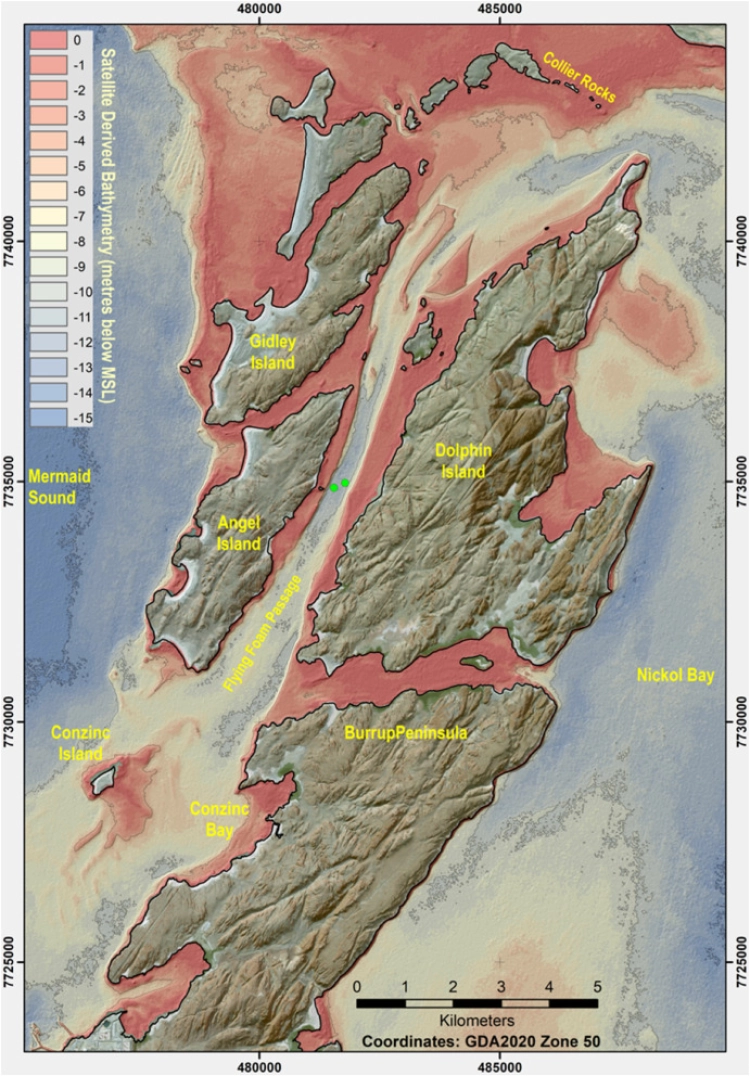
Oral traditions can last astonishing spans of time. Aboriginal Australians tell of lands swallowed by the sea 7,000 years ago, and modern bathymetric maps prove their stories true. Below is an image showing where an ancient river flowed between what is today Dolphin and Angel Islands. Artifacts have been found under water that were used by ancient peoples of Australia when this land was above water.
A World Reset
Flood myths almost always leave survivors. A chosen family, a hero warned, a boat built in time. Why is there always someone around to tell the tale? Well, survivors tell the tale, and the flood becomes both a scar and a creation story: why the old world ended, why a new one began. When there are no survivors, the event is lost to time.
Our Own Floods
Today, seas are rising again. The ancient flood stories remind us that when water moves, it rewrites human destiny. Maybe the Great Flood wasn’t just myth. Maybe it was history, told in the only way our ancestors knew how.